
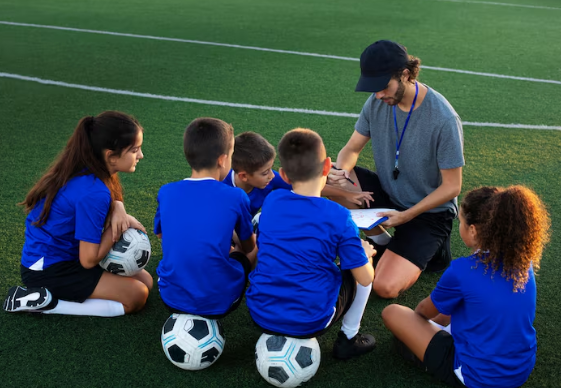
Mastering soccer ball control is critical for young players aspiring to enhance their performance on the field. The ability to skillfully manipulate the ball distinguishes the elite from the average players, allowing them to execute precise moves with confidence. As we delve into the essential exercises tailored for young athletes, it becomes evident that a solid foundation in ball control is pivotal for success. This guide lays out various training drills that cater to different skill levels, focusing on improving first touch, dribbling capabilities, and overall game aesthetics. Coaches, parents, and players can readily apply these exercises on the training ground, ensuring a well-rounded approach to skill development.
Understanding Soccer Ball Control: What It Is and Why It Matters
Soccer ball control encompasses a player’s ability to manage the ball effectively while maintaining directional accuracy, speed, and the overall game flow. This skill includes receiving the ball cleanly, making necessary adjustments to body positioning, and executing precise touches, whether under minimal pressure or in tightly contested situations. At its core, ball control is about consistently keeping possession, which is crucial during both attacking and defensive phases of the game.
Effective ball control is made up of several interconnected components, including:
- First Touch: This refers to how a player receives an incoming pass, setting the stage for subsequent actions.
- Close Control: The ability to maneuver the ball in tight spaces while maintaining it close to one’s feet.
- Directional Control: The skill involved in guiding the ball into open spaces using various foot surfaces.
- Ball Shielding: Protecting the ball from opponents while retaining control, particularly in congested areas.
Players who excel in these areas can maintain possession longer, create scoring opportunities, and significantly reduce turnovers. For young players, early focus on these fundamental skills fosters confidence and seamless technical development, essential for nurturing future talents. Understanding and prioritizing ball control ultimately shapes players’ and teams’ prospects, marking a crucial facet of youth soccer training.
Essential Soccer Ball Control Drills for Beginners
Younger players, particularly those in age brackets like U6 to U8, benefit greatly from simple yet effective soccer ball control drills. These activities aim to foster comfort and confidence on the ball while encouraging frequent touches and smart decision-making. Below are foundational drills suited for this age group:
Cone Weaving Drill
This drill focuses on dribbling and control. Set up 5 to 6 cones in a straight line, spaced about 2 to 3 yards apart. Players will dribble through the cones, first using only their right foot and then the left.
Key Points: Emphasize short, controlled touches, and maintaining the ball close to the feet. Start with three sets of two repetitions in each direction, progressively increasing cone spacing and limiting touches as players improve.
Wall Pass and Control Drill
For this exercise, players stand about 10 yards from a wall or partner. They pass the ball, receive it back, and take a directional touch away from their starting position before playing the next pass. With a focus on quality touches, aim for 20 repetitions per set.
Two-Touch Receiving Drill
A partner stands about 12 yards away to initiate this drill. The receiving player controls the ball with their first touch and passes back with the second.
This exercise reinforces the importance of clean receiving and consistent passing rhythm, making it ideal for young soccer enthusiasts.
Intermediate Soccer Ball Control Drills for Developing Players
As players transition to intermediate levels, typically aged U9 to U11, they can engage in more complex drills that incorporate movement, decision-making, and moderate pressure scenarios.
Four-Corner Passing and Movement
In this drill, set up four cones in a square about 20 by 20 yards in size. One player occupies each corner, with the ball located at one corner. Players pass diagonally across the square and, after passing, sprint to the next cone. Upon receiving the ball, players take a directional first touch before making another pass.
This exercise enhances first-touch speed, encourages movement off the ball, and improves spatial awareness, crucial skills for more competitive play.
Rondo Drill (Keep-Away Circle)
In this classic possession game, arrange 6 to 8 players in a circle while designating 2 to 3 defenders in the middle. The outside players aim to keep possession using one or two touches, while defenders strive to intercept the ball.
Swapping roles when defenders succeed strengthens close control, quick passing, and decision-making under applicable pressure.
1v1 Grid Dribbling Drill
This exercise requires creating a 12 by 12-yard grid with two players inside. One player, the attacker, attempts to dribble from one end to the other, while the opposing player acts as the defender.
By staying within the grid, this drill forces players to develop their dribbling skills and shielding techniques. Swap roles after each attempt and aim for 30-second rounds.
Advanced Ball Control Drills for Skilled Players
For advanced players, generally U13 and above, comprehensive ball control drills become essential for players experiencing intense pressure, speed, and fatigue during gameplay. These drills also include other exercises without a ball that focus on enhancing agility and footwork, critical for superior ball control.
3v3 Possession in Limited Space
In a 20 by 15-yard grid, two teams of three compete for possession, usually adhering to a two-touch maximum rule. The tight playing area forces quick decision-making and sharp first touches while enhancing body positioning.
Playing in short bursts of 4 minutes followed by brief rests helps players adapt to condensed gameplay, mimicking real-match intensity.
Small-Sided 5v5 Games
Playing small-sided scrimmages on a half-field or 40 by 30-yard space enables players to replicate match conditions while increasing participation and touch frequency.
Begin with one- or two-touch restrictions, gradually removing these limitations as players develop their confidence and adaptability.
Ball Control Drills Without a Ball
Players can incorporate drills focusing on movement patterns and body positioning even without the ball. One such exercise involves partners throwing the ball by hand rather than passing. The receiving player concentrates on their body shape and orientation as if preparing for a first touch.
Additionally, movement ladder drills encourage quick-feet patterns to enhance speed and coordination, leading to improved balance when engaging with a soccer ball.
Implementing Effective Training Strategies
To help players effectively develop their soccer ball control skills, coaches must integrate these practices into regular training routines rather than relying on them occasionally. Here are essential strategies to consider:
- Frequency: Commit to 3 to 4 ball control training sessions weekly for development squads and 5 to 6 for serious competitors.
- Duration: Allocate 15 to 20 minutes per training session dedicated solely to ball control before transitioning to tactical drills.
- Progression: Start with basic stationary exercises, then add movement, pressure, and gradually include small-sided games for a comprehensive understanding.
- Feedback: Encourage players to focus on quality touches and body positioning, emphasizing decision-making over sheer speed.
Join POWER GOAL ACADEMY to execute complex, realistic match scenarios and drills that improve teamwork, communication, and tactical understanding.