Locator attachments and Bar attachments offer different routes to denture stabilization, yet neither design suits every patient or implant position. Their retention, maintenance needs, available space, and relationship to Dental implants shape practical treatment decisions.
Evidence comparing attachment systems shows a consistent trade-off: cylindrical Locators usually provide stronger initial retention, while ball attachments often retain force more steadily as components wear. Bar designs add another approach by splinting implants, but clinicians must assess their distinct space, hygiene, and fabrication demands.
Attachment choices for implant-retained overdentures
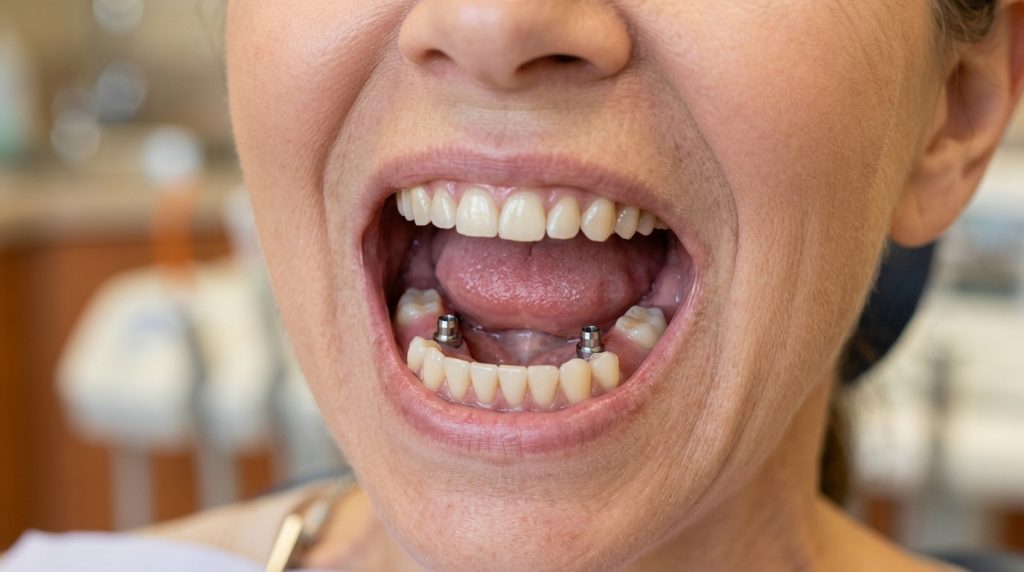
Implant-retained overdentures connect a removable denture to implants through paired components. One component attaches to each implant; its counterpart sits inside the denture and provides replaceable retention.
Locator attachments and cylindrical retention
Locator attachments use a low-profile cylindrical abutment and a replaceable polymer insert, commonly nylon. Color-coded inserts offer different retention levels, helping clinicians adapt the prosthesis to patient needs and implant alignment.
Reviews of 45 clinical and laboratory studies found that cylindrical systems generally start with greater retention than ball attachments. However, repeated insertion and removal can deform the polymer insert, gradually reducing its grip and prompting replacement.
Some newer systems use PEEK inserts to improve wear resistance. Results look promising, but different laboratory methods prevent reliable ranking across products. Clinicians should interpret manufacturer retention figures alongside the patient’s anatomy and function.
Bar attachments and splinted support
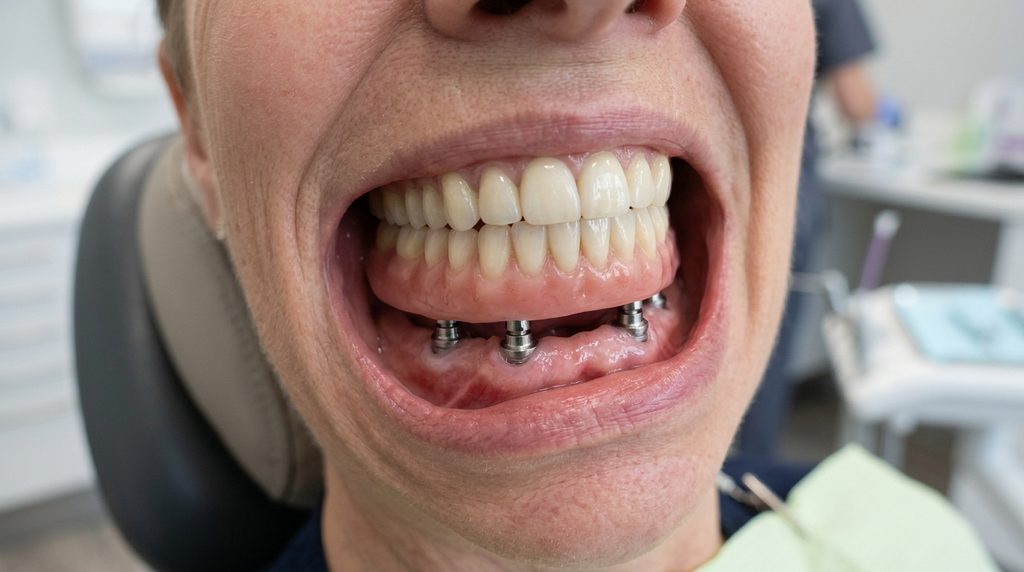
Bar attachments join multiple implants with a rigid framework, while clips or other connectors secure the denture. This design can distribute forces across implants and provide a broad, unified support structure.
Bars require adequate restorative space and careful cleaning beneath the framework. Their fit, contour, and clip design influence comfort, hygiene access, retention, and maintenance. The cited review excluded bars, so its Locator-versus-ball findings cannot establish that bars outperform either system.
Retention and stability over time
Initial retention describes the force needed to dislodge a denture along its insertion path. A higher reading does not automatically mean better everyday comfort or more durable performance.
Wear, maintenance, and component materials
Repeated chewing and denture removal wear the replaceable retention device. Ball systems may use metal lamellae, rubber rings, or polymer caps; Locator designs typically rely on polymer inserts against metal abutments.
Studies report faster, more substantial wear in some polymer inserts than in metal retention parts. Ball systems can therefore maintain retention more consistently, although both designs need routine follow-up and component service.
Common maintenance includes activation of suitable ball components or replacement of worn inserts. The greatest need often arises during the first year, though frequency varies with use, alignment, hygiene, and study conditions.
For practical planning, clinicians weigh several connected factors:
- Choose Locator attachments when low vertical space or stronger initial retention matters.
- Consider ball attachments when stable retention and less frequent insert changes suit the patient.
- Assess Bar attachments when splinting, available space, and cleaning access support the design.
- Schedule reviews to detect looseness, wear, tissue changes, or denture-fit problems early.
Implant alignment and denture care
Implant angulation can affect friction, retention, and wear, particularly when the denture follows a different insertion path. Locator systems offer extended inserts for greater divergence, while ball attachments can accommodate moderate angulation.
Clinicians should align attachment components with the denture’s insertion path and avoid unnecessary implant divergence. Gentle daily cleaning helps protect polymer parts; prolonged exposure to aggressive cleansing solutions may weaken retention.
Bar design and clinical selection
Bar design varies in material, profile, implant connection, and clip arrangement. A clinician and dental laboratory select these features around anatomy, restorative space, access for hygiene, and the intended path of denture insertion.
Comparing designs in prosthodontics
Prosthodontics balances retention with comfort, serviceability, and tissue health. The table summarizes broad design considerations, not a universal ranking; individual components and clinical conditions change outcomes.
| Design | Typical advantage | Key consideration |
|---|---|---|
| Locator attachments | Low profile and adjustable retention | Polymer inserts may wear and need replacement |
| Ball attachments | Simple handling and steady retention | Component size and insert material matter |
| Bar attachments | Splints implants within one framework | Needs space and careful underside cleaning |
Attachment studies often use different cycle counts, loading speeds, and test environments, limiting direct comparisons. Laboratory results also cannot reproduce every oral condition, so clinical examinations remain essential.
Choosing a suitable stabilization approach
Selection should reflect implant position, available bone and prosthetic space, dexterity, cleaning habits, desired retention, and willingness to attend maintenance appointments. A patient who struggles with frequent visits may value durability differently from someone prioritizing stronger initial grip.
Discuss Locator, ball, and bar options with a qualified prosthodontist or implant dentist. A personalized examination can match the attachment design to implant alignment, oral tissues, and everyday needs.