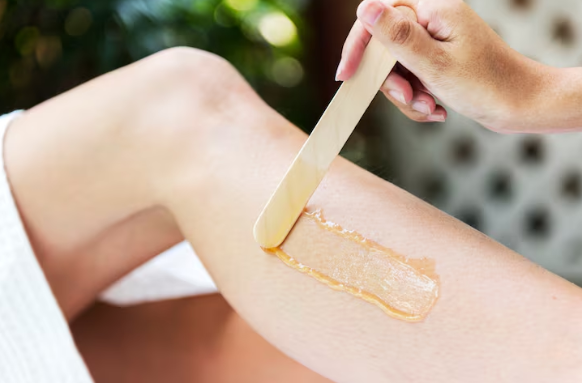
The bikini area requires a particularly careful approach to hair removal because its skin is delicate, sensitive and frequently exposed to friction. Hard wax is often chosen for this region, but does a working temperature around 40°C really make it more suitable for sensitive skin?
Understanding Hard Wax
When waxing sensitive bikini areas, the choice of wax and its working temperature can significantly influence comfort. Hard wax differs from traditional strip wax because it is applied directly to the skin, allowed to cool and then removed without requiring a fabric or paper strip.
Its formulation is designed to grip the hair while remaining relatively flexible once it has cooled. This characteristic makes it useful for smaller, sensitive areas where precise application is important.
However, 40°C should not be regarded as a universal temperature for every hard wax. The appropriate working temperature depends on the specific formulation and manufacturer’s instructions.
Examining Working Temperature
A temperature around 40°C can provide a workable consistency for certain hard wax formulations while helping the product remain spreadable without becoming excessively hot. The sensation on the skin, however, is influenced by more than the number displayed on the wax heater.
The actual temperature of the wax at application can differ from the heater setting, and the product can cool quickly once it is spread onto the skin. Professional practitioners therefore assess both temperature and consistency before applying it.
The safest approach is always to follow the product’s recommended operating range rather than assuming that 40°C is suitable for every formulation.
Assessing Skin Sensitivity
The bikini area contains delicate skin that may react more readily to heat, friction and mechanical pulling. Excessively hot wax can cause burns, while unsuitable application or repeated passes can contribute to redness and irritation.
A professional treatment therefore involves more than simply choosing a temperature. Skin condition, hair thickness, previous reactions and the interval since the last hair removal session all deserve consideration.
Comparing Hard Wax Benefits
Hard wax can be particularly convenient for bikini waxing because it adheres strongly to the hair and can be applied in smaller sections. This allows the practitioner to work gradually rather than covering large areas at once.
The technique can also reduce the need for repeated contact with the same region when the wax is applied correctly.
Reducing Unnecessary Pulling
A well-applied hard wax layer should grip the hair sufficiently for the practitioner to remove it with a controlled movement. Proper application therefore matters as much as the wax itself.
Several practices can help create a more comfortable experience:
- Apply the wax in manageable sections rather than covering an excessively large area.
- Allow the wax to reach the correct setting consistency before removal.
- Keep the skin appropriately taut during the removal movement.
- Avoid repeatedly waxing the same area when the skin has already become irritated.
These measures can help minimise unnecessary mechanical stress on sensitive skin.
Maintaining Skin Comfort
Preparation and aftercare also influence how the skin reacts. The area should be clean and free from products that interfere with wax adhesion. After treatment, avoiding excessive heat, intense exercise and tight clothing for a suitable period may help reduce irritation.
Gentle skincare is preferable immediately after waxing because freshly treated skin can be more reactive than usual.
Managing Temperature Safely
The relationship between heat and comfort deserves particular attention. A wax that feels comfortably warm to one person may feel too hot to another, especially when the skin barrier is compromised.
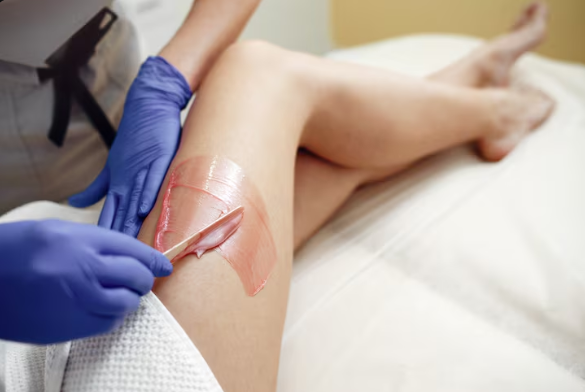
For this reason, professional practitioners should check the wax before applying it extensively. A small test can help identify whether the product is at an appropriate temperature and consistency.
Checking Product Instructions
Different hard waxes contain different combinations of resins, polymers and other ingredients. Their melting and application characteristics consequently vary.
Rather than treating 40°C as a fixed rule, practitioners should use the manufacturer’s specified range and verify the actual product temperature with suitable equipment when necessary. This approach is more reliable than relying solely on the heater’s displayed setting.
Avoiding Common Mistakes
Several habits can increase the likelihood of discomfort during bikini waxing. Applying wax that is too hot, working over irritated skin or repeatedly treating the same patch can compromise the skin’s comfort.
People with active irritation, open wounds, sunburn or certain skin conditions should postpone waxing and seek appropriate professional advice before proceeding.
Choosing Professional Waxing
Hard wax at approximately 40°C may suit certain formulations and sensitive bikini treatments, but the figure itself does not guarantee safety or comfort. Product specifications, actual wax temperature, application technique and individual skin condition all need to be considered together.
Conclusion
Hard wax can be a practical choice for sensitive bikini areas because it allows precise application and effective hair removal without strips, but 40°C is not a universal setting for every product. For personalised guidance, temperature assessment and safer treatment, consult an experienced waxing professional who can adapt the technique to your skin.

