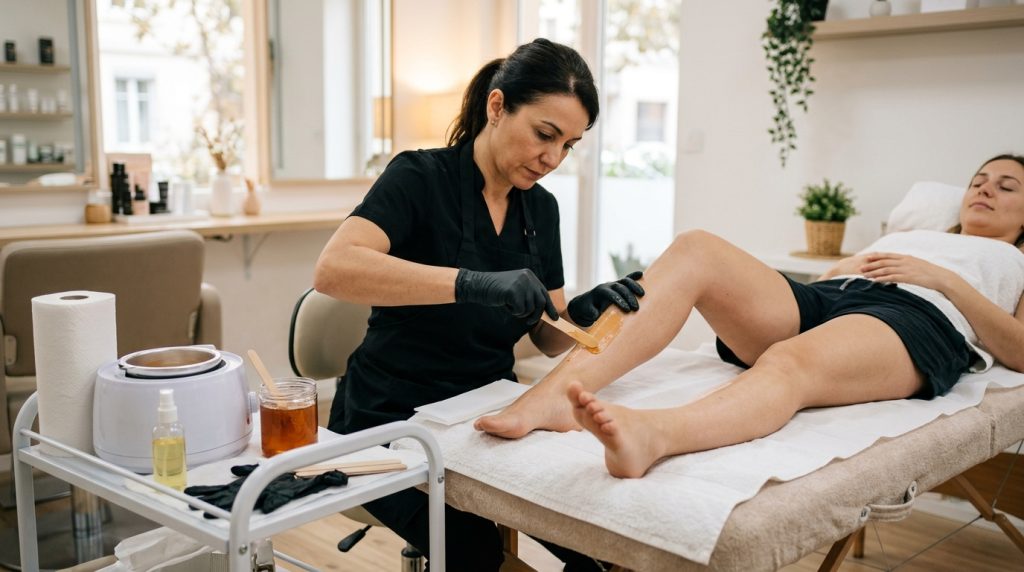
Wax temperature and strip technique shape whether hair releases cleanly or skin suffers unnecessary traction. Because wax formulas differ, product instructions should guide every service, while careful testing and controlled removal protect the skin barrier.
Skin lifting prevention depends on more than temperature alone. Clean, dry skin, a suitable wax layer, taut support, and a quick pull close to the skin all reduce unnecessary stress. When the wax feels unusually hot, thick, runny, or brittle, stop and check it before continuing.
Wax temperature ranges that reduce skin lifting
Wax needs enough warmth to spread and grip hair, but excessive heat can irritate or burn skin. Overheated wax may also turn too fluid, making application less controlled and increasing exposure to delicate areas.
| Wax type | Typical working range | Texture cue |
|---|---|---|
| Soft wax | 105–115°F (40.5–46.1°C) | Warm honey, spreadable |
| Hard wax | 95–105°F (35–40.5°C) | Thick cream, pliable |
These figures describe common professional guidance, not a replacement for the product label. Some at-home kits specify different ranges, so follow their instructions rather than transferring one formula’s settings to another.
Check the wax with a reliable thermometer instead of trusting the warmer dial alone. Heaters can drift, and temperature swings greater than roughly 3°F may change how wax spreads and grips. Calibrate equipment regularly, and recheck during longer services.
Skin preparation and controlled wax application
Once the wax reaches a comfortable, workable consistency, prepare the skin carefully. A small patch test helps identify excessive heat or an unwanted reaction before treating a larger area.
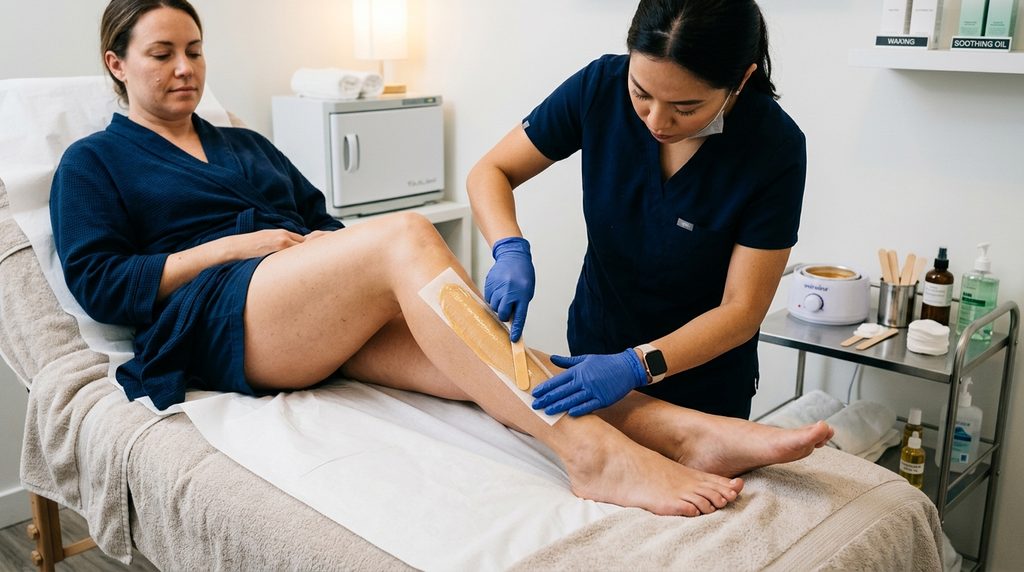
Skin preparation before waxing
Cleanse away sweat, lotion, and oil, then dry the area completely. Moisture and residue can weaken adhesion, prompting repeated passes that irritate skin. Use only a suitable pre-wax product, and apply it sparingly according to its directions.
Inspect the area before starting. Avoid waxing skin with cuts, sunburn, active irritation, or recent injury. Certain medicines and skin treatments can also increase sensitivity; consult a qualified clinician when suitability remains unclear.
Wax application and strip removal
For soft wax, use a thin, even layer and place the strip over it. Apply wax in the hair growth direction, then smooth the strip firmly in the same direction.
Hold the surrounding skin taut with one hand. With the other, remove the strip swiftly and parallel to the skin, pulling against hair growth direction. Never jerk upward; that angle increases skin traction and can contribute to lifting.
These practical checks support a safer strip waxing technique:
- Test the temperature on a small area before full application.
- Work in manageable sections and avoid repeated passes over sensitive skin.
- Keep skin taut during strip removal and pull close to its surface.
- Stop immediately if sharp pain, excessive heat, or unusual redness appears.
Hard wax follows a different method because it grips hair as it sets and usually needs no fabric strip. Apply a sufficiently thick layer, leave a removal edge, and wait until it feels firm but flexible. If it cracks, reassess the product temperature and application thickness.
Post-wax care and warning signs
After each pull, apply gentle pressure with a clean hand or cloth. This can ease the immediate sting, but it cannot reverse an injury, so inspect the skin before moving onward.
For 24 to 48 hours, limit friction, intense heat, swimming, and direct sun exposure. Choose loose clothing and gentle cleansing. Resume mild moisturizing when sensitivity settles; avoid harsh exfoliants on freshly waxed skin.
Persistent pain, blistering, open skin, or marked swelling needs medical assessment. Do not wax the affected area again, and avoid applying strong products without professional advice. A cool compress may soothe minor irritation, while a clinician can guide care for burns or skin lifting.
Consistent heat checks, thoughtful skin preparation, and parallel strip removal work together to protect the skin while removing hair effectively. When technique or skin suitability raises concerns, consult a licensed esthetician or healthcare professional for personalized guidance.


